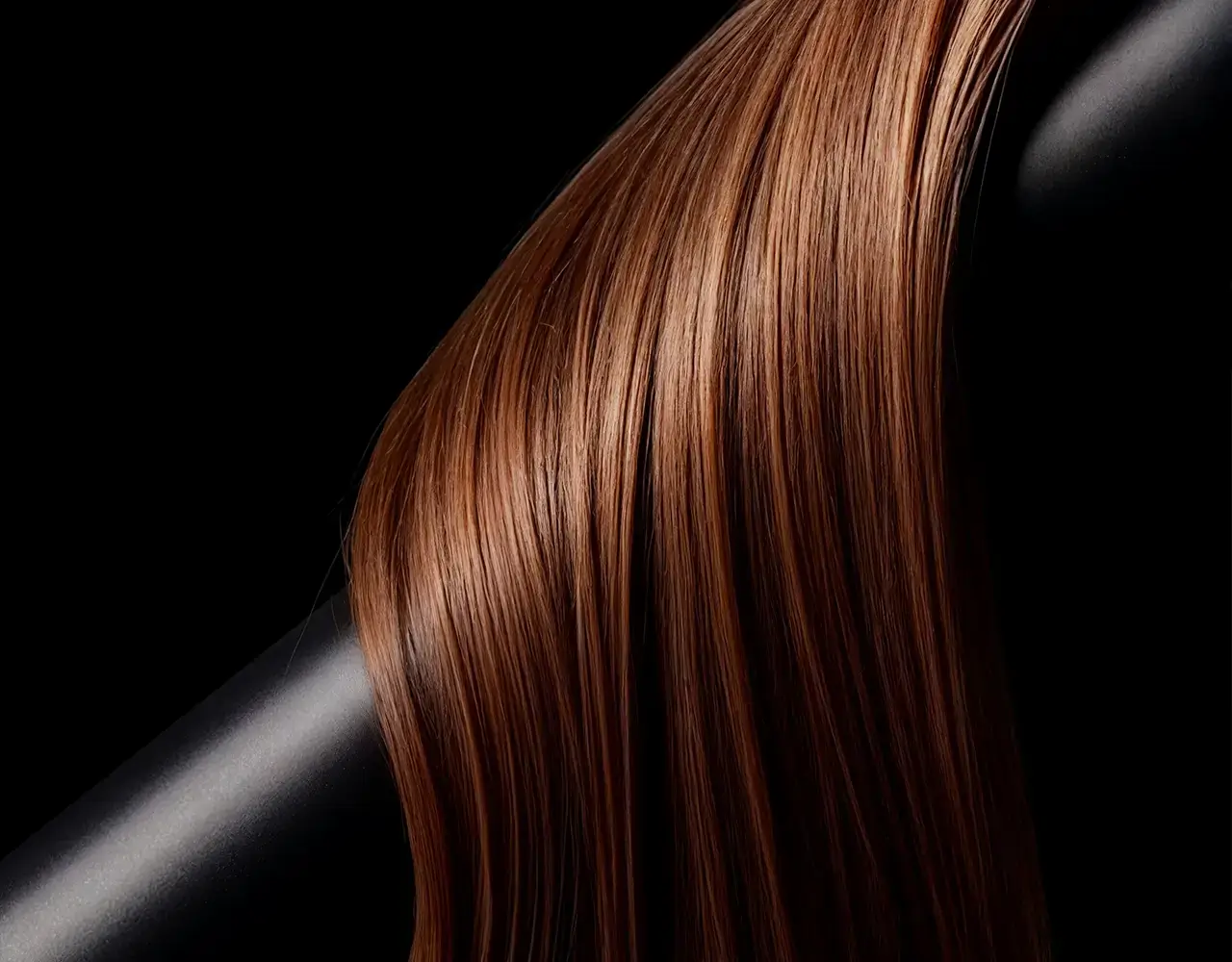
What a hair toner does
A hair toner changes the tone of your hair, not the level of it. It deposits pigment that neutralises unwanted tones and lifts your hair by nothing at all.
That distinction is the heart of the whole subject. Lightening decides how light your hair gets, toning decides what colour that lightness takes.
Colourists describe that role in consistent terms. Tracey Cunningham, colour consultant at Redken, talks about refining and balancing the tone after lightening, which is exactly what a toner does.
In practice you see the difference in minutes. The same bleached hair moves from brassy yellow to cool beige without a millimetre of extra lifting.
Toning is not a nice extra after a blonding service, it is the second half of it. Skip that step and you have delivered half a treatment.
The colour theory behind neutralising
Every toner runs on an old principle: colours opposite each other cancel each other out. Violet quiets yellow, blue quiets orange and green quiets red.
Physically this is subtractive colour mixing. Pigments absorb certain wavelengths of light and reflect the rest, so adding an opposing pigment removes exactly the warm wavelengths from what reaches your eye.
The colour wheel hairdressers use is not the one physics works with, by the way. It is the classic artist wheel built on red, yellow and blue, a simplification that predicts pigment neutralisation extremely well in practice.
That is also where the trap sits. Too much violet does not make hair whiter but lilac, because neutralising is about dosage rather than quantity.
- Yellow cast in light blonde hair: violet or purple toner.
- Orange cast in darker blonde: blue toner, since orange sits a level below yellow.
- Red cast in brown hair: green or ash toner, usually in a small dose.
- Blonde gone flat and dull: a neutral or beige gloss that restores shine without shifting the tone.
Why bleached hair turns yellow or orange
The yellow cast is not a mistake, it is what sat under your colour. Lightening exposes a warm underlayer that was always there.
Hair contains two kinds of melanin: eumelanin, which is brown to black, and pheomelanin, which is red to yellow. In oxidative bleaching eumelanin breaks down faster than pheomelanin, so the warm tones become relatively more dominant.
That order is predictable and known as the levels of lift. Black moves through brown to red, then orange, then yellow and only then to pale yellow.
Where you stop therefore decides which toner you need. Stopping at orange and reaching for violet does not work, because violet is the opposite of yellow and not of orange.
It also explains why the toner disappoints at home so often. The problem is not the product but which level the hair actually stalled at.
Demi-permanent, semi-permanent and gloss
There are three kinds of toner, and they differ mainly in whether a developer is involved. That single detail decides how long the result holds.
Demi-permanent toner
This is the professional standard. A demi-permanent toner is mixed with a low volume developer, usually five to ten volume or one and a half to three percent, and processes in five to twenty minutes.
The formula is mildly alkaline, opens the cuticle slightly and lets pigment settle into the outer cortex. Lifting it does not do, or barely.
Semi-permanent toner
Semi-permanent works without developer and lays direct dyes on the surface of the hair. That is the gentlest option and at the same time the shortest lived.
Gloss or glaze
A gloss is usually a demi-permanent formula with little to no lift, often on an acidic base. The emphasis is on shine and refreshing existing colour, with a light tonal correction alongside.
When you need a toner
A toner belongs after every lightening service and again every few weeks after that. Outside blonde hair it is usually unnecessary.
The clearest signals are turning yellow or orange after a few weeks, a colour that feels dull and flat, or highlights that came out too warm. In all three cases the pigment is the problem and not the level of the colour.
There is a less familiar use as well. After a colour correction where dark pigment has been removed, a toner evens out the patchy picture such work almost always leaves behind.
What a toner does not fix: regrowth that is too dark, insufficient lift or damage. Those problems call for a different service.
Does a toner work on dark hair
On untreated dark hair a toner does almost nothing visible. It can only deposit pigment and has no means at all of breaking down the melanin present.
What you do notice on dark hair is shine and a subtle shift in undertone. An ash toner can quiet a coppery glint, but dark brown will not become lighter or blonder.
Anyone wanting a genuinely different colour on dark hair ends up at permanent colour or a lightening service. Both are more invasive and belong with someone who can judge the condition of your hair.
Save yourself the disappointment. A toner on dark hair is hair care with a hint of colour, not a colour change.
How toning goes step by step
Toning takes twenty to forty minutes for most people, rinsing included. Here is what happens in that time.
- Establishing which level your hair sits at and exactly which unwanted tones are in it, in daylight rather than under a lamp.
- Choosing the opposing colour: violet against yellow, blue against orange, green against red.
- Mixing the formula with a low volume developer, typically five to ten volume, in the ratio the manufacturer specifies.
- With porous ends, starting on the less porous sections so the ends do not get a head start.
- Applying evenly in thin sections and working quickly, because a toner takes hold from the first minute.
- Checking development every few minutes instead of blindly waiting out the maximum time.
- Rinsing with lukewarm water until it runs clear and finishing with an acidic conditioner.
Checking during processing is the step that goes wrong at home. A toner left on two minutes too long gives exactly the lilac or grey cast everybody fears.
How long a toner lasts
Count on four to six weeks, though the figures quoted vary widely. Professional sources put a demi-permanent toner at roughly twenty to twenty eight washes, while others land at two to three weeks.
That spread is not sloppiness, it is the real story. Longevity depends mostly on how porous your hair is and how often and how hot you wash it.
Semi-permanent toners and home products sit at the bottom of that range. They rinse out faster because nothing has been fixed inside the shaft.
A working rule for blonde hair: tone roughly every three to six weeks, so more often than the regrowth needs. The warmth returns before your roots become visible.
Porosity decides the result
Porosity is the factor nobody accounts for. How open your cuticle sits decides both how fast the toner takes and how fast it disappears again.
Research into how substances penetrate hair shows the same pattern consistently. Porous hair absorbs dye faster, but releases it again just as quickly through those same raised scales.
That explains the classic problem with bleached hair. The ends are more porous than the roots, take the toner deeper, turn cooler than intended and then fade first.
The answer is not a stronger toner but a different order and a shorter time on the ends. On very porous hair five to ten minutes is often plenty.
Low porosity hair needs the opposite. There the processing time may run longer, simply because the pigment needs more time to get in.
Toner or purple shampoo
Purple shampoo maintains a toner, it does not replace one. That is the whole answer to the most asked question on this subject.
Purple shampoo contains direct violet dyes and no developer. The pigment stays on the surface and washes away within a few shampoos.
A toner puts pigment inside the shaft and therefore lasts weeks. That difference in depth explains everything: one is maintenance, the other is a service.
Overdoing purple shampoo does not produce whiter hair but a lilac or dull cast. That is not damage, incidentally, only accumulated pigment that comes out again over a few normal washes.
A sensible rhythm: purple shampoo one wash in three, left on for a couple of minutes at most. Use it daily and you slowly push your colour the wrong way.
Does a toner damage your hair
A toner is clearly milder than permanent colour, but do not call it damage free. Something does happen to your cuticle.
Most professional toners are alkaline and sit around pH eight to ten. That alkalinity swells the shaft slightly, just enough to let the pigment in.
What sets a toner apart is the absence of real lifting. Hardly any melanin is broken down, and that is where most of the damage in ordinary colouring comes from.
Acidic gloss formulas now exist that keep the cuticle largely closed. Manufacturers describe those as zero lift and zero damage, which is a manufacturer claim rather than an independent finding.
The real risk sits not in the toner but in the lightening before it. Hair lifted too far takes any toner unevenly, and then the product looks like the culprit.
Care and colour retention after toning
Washing less and rinsing cooler does more for your colour than any product. Every wash removes part of the pigment.
Wait at least forty eight hours before the first wash after the service. After that a shampoo and conditioner for coloured hair is the baseline, preferably sulphate free.
Heat is the second culprit. Hot water opens the cuticle and a straightener without heat protection speeds up both fading and drying out.
Sun and pool water deserve attention too. UV light breaks colour pigments down, and the green cast bleached hair picks up in a pool comes from copper in the water, oxidised by the chlorine and bound into porous hair.
A weekly mask keeps bleached hair supple and porosity even. More on that under hair care.
What toning costs
With Hanna Valiullina toning starts at sixty euro. Lightening the regrowth with toning starts at a hundred and twenty euro and highlights without toning at a hundred.
Those amounts include the home visit within the service area. The price moves with your hair length and the amount of product needed.
On blonde hair, budget six to twelve toning appointments a year. That is clearly more often than the lightening itself, and it is exactly what makes blonde high maintenance.
What toning saves is less visible but real. A well maintained colour means lightening less often, and lightening is the step that genuinely stresses your hair.
Toning at your home
Hanna Valiullina tones at your home in Papendrecht and the surrounding area, with professional products and a formula mixed for the appointment. No travelling, and you spend the processing time in your own chair.
With toning that matters more than with other services. You judge the shade immediately in the light you wear it in every day, not under salon lighting that scrubs the yellow away.
Toning combines logically with lightening, highlights or an airtouch in the same appointment. See the options under services or read how a soft lightening service works in the article on airtouch.
For an appointment or advice on which shade suits you, get in touch.
Frequently asked questions about hair toners
What does a hair toner actually do?
A toner adds pigment that neutralises unwanted tones in your hair, usually the yellow or orange cast left behind after lightening. It does not make your hair lighter, it only refines the shade already there.
How long does a hair toner last?
Count on roughly four to six weeks, which for most people works out at twenty to twenty eight washes. How porous your hair is and how often you wash shifts that considerably in both directions.
Does a hair toner work on dark hair?
Barely. A toner can only deposit pigment and cannot lift, so on untreated dark hair you get some extra shine and no real colour change.
What is the difference between a toner and purple shampoo?
Purple shampoo leaves a temporary violet film on the outside of the hair and rinses away within days. A toner is a colour service that puts pigment inside the shaft and lasts for weeks.
Does a hair toner damage your hair?
Less than permanent colour, but not not at all. Most professional toners are mildly alkaline and open the cuticle a little to let pigment in, while almost no melanin is broken down.
Why does bleached hair turn yellow or orange?
During lightening the brown black eumelanin breaks down faster than the red yellow pheomelanin. What remains is the warm underlayer, and that is the yellow or orange cast you see.
How often should a toner be redone?
On blonde hair usually every three to six weeks, roughly twice as often as the regrowth itself needs attention. Washing less and rinsing lukewarm stretches that noticeably.
What does toning at home cost?
With Hanna Valiullina toning starts at sixty euro, home visit included. Lightening the regrowth with toning starts at a hundred and twenty euro.
The essentials
A hair toner changes the tone of your hair and not the level. Lightening decides how light your hair gets, toning decides what colour that lightness takes.
Pick the opposing colour based on what you see: violet against yellow, blue against orange. On untreated dark hair toning is pointless, because a toner lifts nothing.
Count on four to six weeks and use purple shampoo as maintenance, not as a replacement. How porous your hair is ultimately decides both the processing time and the longevity.