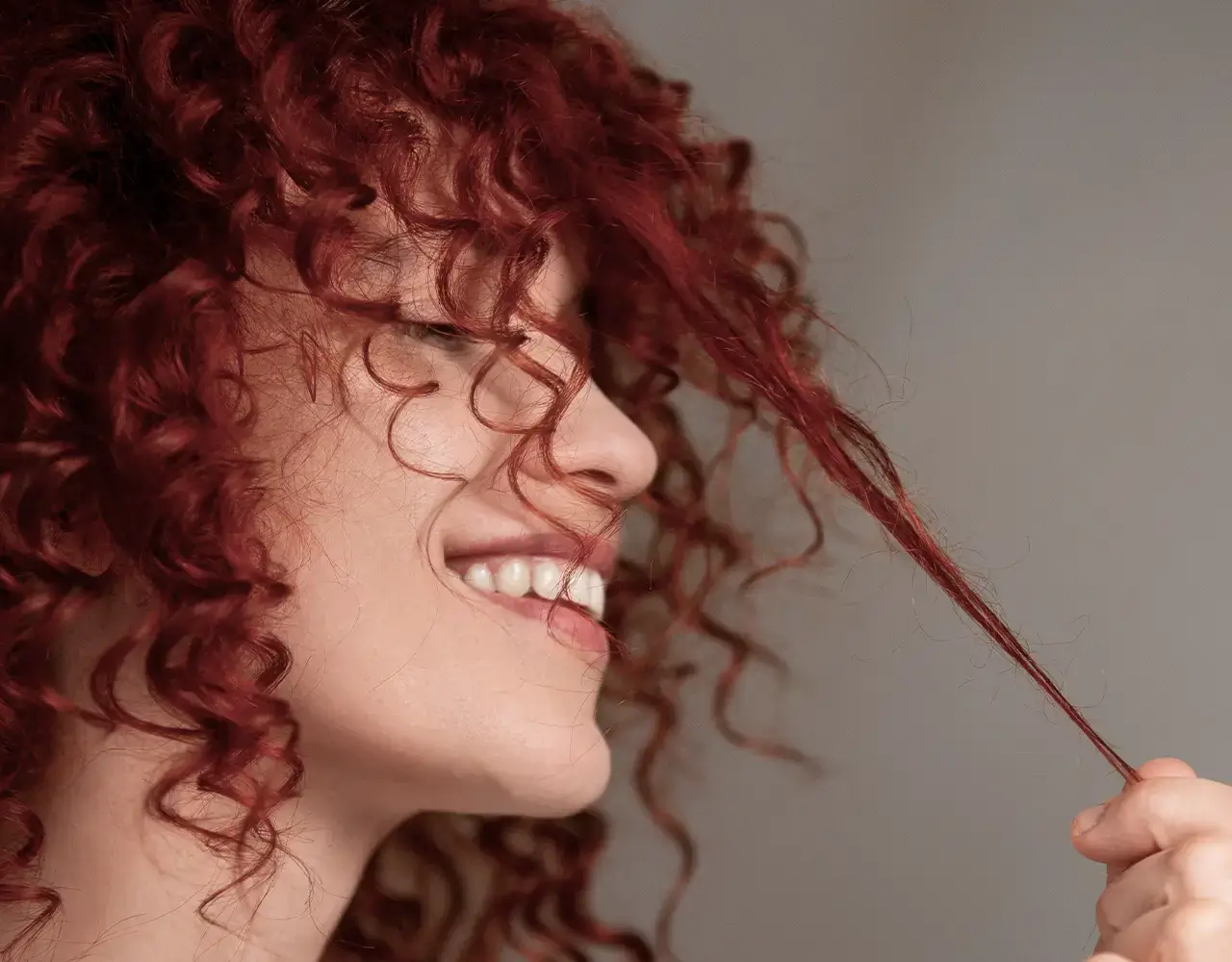
How long to wait before washing after a perm
Wait twenty four to forty eight hours, then treat your hair gently for another week. That second half of the advice is almost never given and is better supported than the first.
The classic waiting time comes from the trade. I found no published measurement relating curl retention to the time before the first wash.
What has been measured is how slowly the curl chemically settles. From that it follows that the first week counts for more than the first day.
The rest of this article explains why, and what to do and avoid during that week. In short: after forty eight hours you may wash, but keep it lukewarm and gentle.
Where the forty eight hours came from
The rule is plausible but never measured. That is an important distinction if you take advice seriously.
I could find no published research plotting curl retention or damage against the timing of the first wash. The American Academy of Dermatology gives no waiting period at all on its colouring and perming page.
The support that does exist comes from the chemistry of the fibre. Free sulfur groups remain after neutralisation and keep exchanging among themselves for days.
So waiting is sensible, just not because something flips at hour forty nine. It is a gradual process that heat and water accelerate.
How a perm works
Chemically a perm is two steps: breaking and rebonding. Everything that goes wrong afterwards goes wrong in the second step.
First a reducing agent, usually thioglycolic acid or ammonium thioglycolate, cleaves the disulfide bonds between the keratin proteins. The hair becomes soft and mouldable, and at that moment the rods set the new shape.
Then an oxidiser closes the bonds again in their new position. That is done with hydrogen peroxide, sodium bromate or a related agent, usually at a low concentration.
That second step is called neutralising for good reason. Without proper oxidation the bonds stay open and the curl drops within days.
There is more on the service itself on the page about permanent and curls.
Why not every bond comes back
This is the most interesting figure in the research on perms. Only seventy to eighty percent of the sulfur groups reform into stable bonds.
The rest remain as free sulfur groups, and they drive an initial rapid rebound of the curl. After that comes a second, far slower phase in which the shape keeps settling.
At forty five degrees, which the researchers take as the upper limit for wash water, that slow phase has a time constant of seven to eight days. At one hundred degrees the same process collapses to about seven hours.
The practical advice hides in there. Heat and water are exactly the two things that accelerate the relaxation of your curl, and you use both when washing.
So it is not only that first day. The whole first week deserves lukewarm temperatures and gentle hands.
The first wash
The first wash is the most delicate one, and it sets how tight your curl still is a month later. Four things do the work.
- Use lukewarm water rather than hot, because heat demonstrably speeds the curl dropping.
- Little shampoo, only on the scalp, and do not rub it through the lengths.
- Conditioner on the lengths and ends, left for at least a minute.
- Squeeze the water out of your curls and blot with a towel, since rubbing creates frizz.
Detangle only when your hair is wet and saturated with conditioner, using your fingers or a wide tooth comb. Start at the ends and work upward.
Keep a brush out of dry curls for the first weeks. Dry combing pulls the curl clumps apart and turns definition into frizz.
Tangles come out with conditioner and patience rather than force. Chemically treated hair breaks in exactly that spot.
How often to wash after a perm
Two or three times a week is enough for nearly everyone. Washing more often does more harm than an extra day before the first wash undoes.
Permed hair is drier at the ends than straight hair, and that is no accident. Sebum travels down the bend of a curl less easily than down a straight shaft.
In between you can refresh your hair with water and a little leave-in. That wakes the curl without a full wash.
It is tempting to wash more often because the scalp feels greasy. In that case wash only the scalp and leave the lengths alone.
Caring for permed hair is not complicated beyond that: a special shampoo is not needed, a mild low pH one is. A weekly mask keeps the shape supple and the definition clearer.
Which shampoo and which pH
Watch the acidity, not the words sulfate free. The science is clearer on this than the marketing.
An alkaline pH raises the negative charge of the hair surface and the friction between hairs, producing lifted scales, breakage and frizz. In a study of one hundred and twenty three shampoos only about thirty eight percent had a pH of 5.5 or lower.
For permed hair that counts double, because frizz is exactly the opposite of definition. A low pH keeps the scales flat and the curl clumps together.
That sulfate free shampoo makes a perm last longer I found nowhere supported. It can be pleasant, just not for that reason.
Well supported, on the other hand, is an acidic product immediately after colouring. Research shows it lowers cuticle permeability and speeds recovery from mild damage.
Drying, diffusers and heat
Air drying is the safest route, and that is not merely caution. The kinetics of the curl show that heat speeds up its relaxation.
If you do use a dryer, choose a low setting and keep your distance. A diffuser spreads the airflow and disturbs the curl clumps less, though that is craft experience rather than a measured advantage.
Above all, do not bring a straightener or curling iron near wet hair. Water in the shaft turns to steam, expands and blows the fibre apart from within, damage known as bubble hair.
Touch your curls as little as possible while they dry. Every touch on half dry hair breaks the shape that is in the middle of setting.
Combing, detangling and sleeping
Most curl is lost outside the shower. Mechanics does more damage here than chemistry.
The dermatology association is explicit: hair is delicate when wet, so use a wide tooth comb rather than a brush, and comb the ends first before working higher. For textured hair the same body advises brushing it while wet.
For sleeping you can gather your curls loosely on top of your head. That reduces friction against the pillow, which saves frizz and breakage.
Wear your hair loose or loosely tied during the day. Sustained tension along the hairline damages the follicles, and that damage eventually becomes permanent.
Alkaline, acid and bio perms
Acid does not automatically mean carefree here, and that is where the advice often goes wrong. Gentler on the fibre, harder on your skin.
An alkaline perm works with thioglycolic acid or its salts, capped in Europe at eight percent for consumer use and eleven percent for professional use, at a pH between seven and nine and a half. That is the classic version with the distinctive smell.
An acid perm uses glyceryl monothioglycolate, contains no ammonia and is activated with heat. Dermatology sources do describe acid perms as gentler on the hair and better suited to fine or fragile hair. The same agent, however, is a known contact allergen for both stylist and client, and can remain active in the hair shaft for months.
A comparative study of straightening measured protein loss: untreated hair 1.12 micrograms per gram, alkaline agents around 2.5, and the acid agent, glyoxylic acid, 3.56. The acid product did leave a protective film and less visible cuticle damage, while the alkaline products lowered tensile strength most.
The lesson is that every version comes with its own trade off. What a bio perm or biowave contains also differs per brand, so ask about the agent rather than the label.
What a perm does to your hair
More changes than the shape, and it helps to know that before you start. Under a microscope it is clearly visible.
Healthy hair has six to eight overlapping cuticle layers. On permed hair those layers curl up or break off, leaving the cuticle disordered and more permeable.
There is one detail few people expect. Permed hair contains fewer melanin granules than untreated hair, which explains why colour can look slightly different after a perm.
That increased permeability cuts both ways. Products absorb more easily, and moisture and colour leave just as easily.
So care after a perm is not an extra but part of the result. A weekly mask keeps the curl supple and the definition intact for longer.
Combining a perm with colour
Not in the same week, and the order is fixed. Here the advice is clear and comes from dermatologists.
Trade guidance is one chemical service at a time, and if you want to combine perming or relaxing with colour, do the perm two weeks beforehand. Shape first, colour second.
The reason is cumulative load. Two processes that both open the cuticle do more damage than the end result reveals.
On bleached hair a perm deserves a conversation before you book it. Bleaching has already broken disulfide bonds, and there is a limit to what a fibre tolerates.
How long a perm lasts
Expect three to six months, with the curl softening gradually rather than disappearing suddenly. That gradualness is inherent to the chemistry.
Your hair grows about a centimetre a month, so after three months there are three centimetres of straight regrowth. On long hair that barely shows and on short hair it does.
How you wash and dry decides the rest. Hot water and daily heat noticeably shorten those months.
Wait for a new perm until the previous one has largely grown out. Working over an existing perm loads the same fibre twice.
What a perm costs
With Hanna Valiullina a perm and curls service, the bio perm or biowave, starts at one hundred and fifty euros. That includes the visit to your home inside the working area.
The length of the appointment depends on your hair length and the curl size you want. Smaller rods mean more rods and therefore more time.
The full list is on the services page. For advice on whether your hair is suitable, get in touch.
That conversation is mostly about your chemical history. Previous bleaching or colouring decides whether a perm is wise.
Frequently asked questions about washing hair after a perm
How long should you avoid washing your hair after a perm?
The usual rule is twenty four to forty eight hours, and it comes from the trade rather than from a measurement. There is a chemical reason to be careful, but it runs over days rather than hours.
Why does the first week matter more than the first day?
After a perm only about seventy to eighty percent of the sulfur bonds reform into stable links. Measurements show the slow relaxation of the curl at around forty five degrees has a time constant of seven to eight days, so hot water during that week is what costs you curl.
How should I wash my hair after a perm?
Lukewarm water, a little shampoo on the scalp and conditioner on the lengths. Squeeze the water out rather than rubbing, and detangle only with your fingers or a wide tooth comb.
Can I blow dry permed hair?
You can, but heat demonstrably speeds up the relaxation of the curl. Air drying is preferable, or a low setting, and never put a straightener or curling iron on wet hair.
How often should permed hair be washed?
Two or three times a week is enough for most people. Permed hair is drier at the ends anyway, because sebum travels down the bend of a curl less easily.
What is the difference between an alkaline and an acid perm?
An alkaline perm uses thioglycolate at a pH between seven and nine and a half, an acid perm uses glyceryl monothioglycolate plus heat. Acid is generally gentler on the fibre, but not automatically carefree: in comparative research on straightening the acid agent did cause more protein loss.
Can I colour my hair after a perm?
Not in the same week. Trade guidance is one chemical service at a time, with perming or relaxing planned at least two weeks before colouring.
What does a perm at home cost?
With Hanna Valiullina a perm and curls service, the bio perm or biowave, starts at one hundred and fifty euros. That includes the visit to your home inside the working area.
The essentials
The twenty four to forty eight hour rule is trade convention with no measurement behind it. Better supported is that the whole first week counts, since the slow phase in which the curl settles has a time constant of seven to eight days at shower temperature.
So wash lukewarm, no more than two or three times a week, with a low pH shampoo. Detangle only when wet with a wide tooth comb and air dry wherever you can.
Acid does not mean carefree: in straightening research the acid agent caused more protein loss, and glyceryl monothioglycolate is a known contact allergen besides. And do not stack a perm and a colour in the same week, because the order is shape first and colour after.