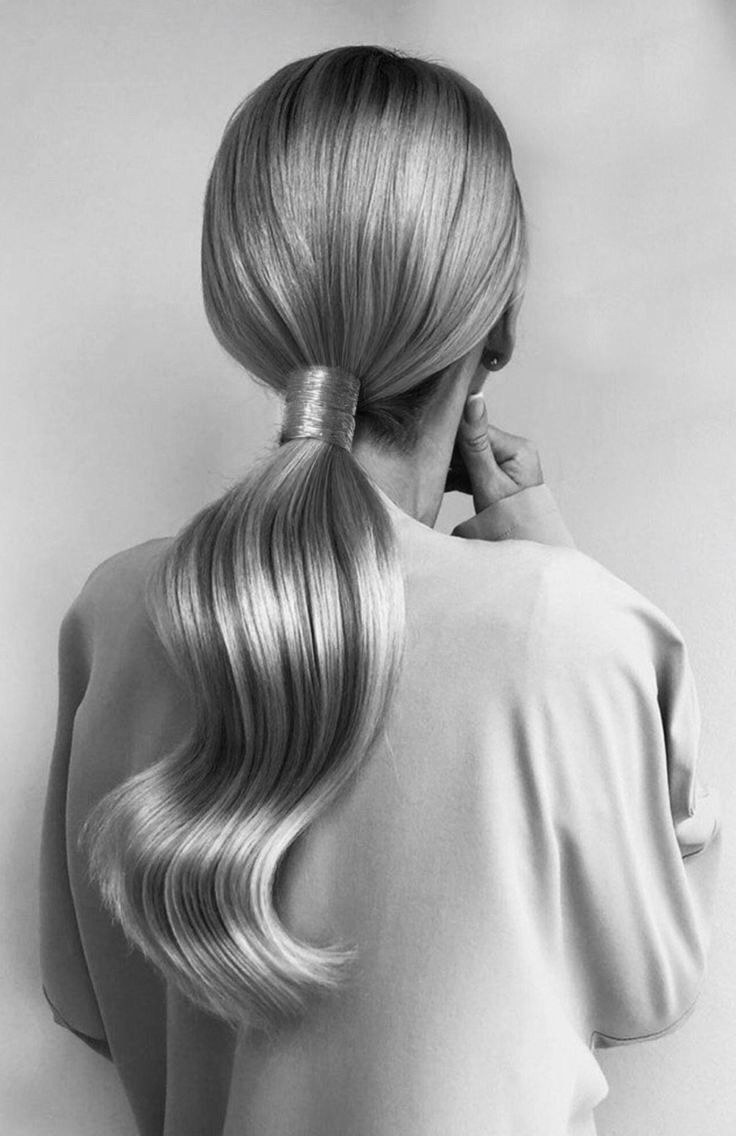
What face framing is
Face framing is contrast around your face. A few pieces at the hairline are lightened so your features are outlined.
It is the smallest possible colour service with the largest visible effect. A few pieces close to your skin do more visually than dozens at the back of your head.
That explains the popularity. You get a fresh look without a full colour service and without your hair type taking much of a hit.
The confusing part is that one word covers two things. That is worth separating first.
Colour technique or layers: two things
Face framing as a colour technique and face-framing layers are two different services. They get mixed up constantly, and that leads to disappointment at the appointment.
Face framing as colour
Here it is about tone: lighter or deliberately darker pieces around the face, to steer light and shadow. In professional education this is also called hair contouring.
Face-framing layers
This is a cutting technique. The hairdresser sets a guideline at the hairline and works back from it in diagonal sections, so the length increases around your face.
The two combine well but are independent. You can have face-framing layers without colour, and colour without layers.
So when booking, say explicitly which of the two you mean. Otherwise you go home with a new cut when you expected a new colour.
Money piece and how much contrast
A money piece is face framing turned up. Two clearly lighter pieces right beside your parting, with deliberately high contrast.
So the difference from ordinary face framing is not a different technique but a different dose. Where face framing runs subtly across the front section, a money piece makes one statement.
The trend broke through widely around 2023 through well known faces. You often read that it is a return of the chunky front pieces of the nineties, but that link is not well documented anywhere, so I will leave it at a resemblance.
- Subtle, one to two shades lighter: reads as naturally sun-lightened hair around the face.
- Medium, three shades: the classic face framing where you see the effect but not the technique.
- Money piece, four shades or more: a striking look that demands upkeep.
- Lowlights instead of highlights: darker around the face, for hair that has gone too light or too flat.
Face shape: honestly, what it is
Every article about face framing sorts faces into shapes and attaches an approach to each. An honest note belongs here.
The idea behind it is an optical trick: light advances, dark recedes, with an oval face as the implied norm. Research supporting it is nowhere to be found, not even in the colour brands own teaching material.
That is not a reason to dismiss it. It is a reason to treat it as trade experience rather than a law of nature, and therefore to depart from it when you like something else.
What counts more in practice is something else. Where your parting sits, how your hair naturally falls and how much texture you have decide whether the lighter pieces stay visible or turn away.
So the most useful question is not what face shape you have. It is which way your hair falls when you leave it alone.
How the colour is applied
Face framing is almost always foiled. The sections sit close to the hairline and there you want precision rather than freehand work.
The colourist takes out the front section and decides how high the lightening starts and how wide the zone runs. That is the whole decision: height and width.
Then it is lightened and toned after rinsing. Without a toner the warm tones released during lifting stay visible, and right by the face that shows immediately.
Count on a short appointment, since little hair is involved. That makes face framing the cheapest way to see a real difference.
If you want a softer version, babylights around the face are an option. Then you work with much finer pieces and keep less contrast.
How face-framing layers are cut
The cutting technique works from front to back. A guideline is set in the front section first, at the length you want around your face.
Diagonal sections are then taken back, each matched to that guideline. That way the length increases gradually instead of in a step.
On fine hair the section is kept small, otherwise the rest of your length looks thinner. On thick hair more weight may come out.
The result is a cut that falls around your face without a fringe being involved. For anyone who wants framing but not a fringe, this is the middle road.
By hair type and length
Face framing works at almost any length, but the effect differs a lot. Mid-length to long hair has the most room.
- Mid-length hair: the happiest length, because the lighter pieces run down around your jawline and collarbone.
- Long hair: a lovely effect, but keep the zone high enough or it disappears into the rest of your length.
- Short hair: possible, with the emphasis on the front pieces around your temples.
- Curly hair: works well, because curls catch light irregularly anyway and the transition softens by itself.
- Fine hair: gives visually more volume around the face, provided the zone does not get too wide.
What your hair type mostly decides is the texture of the transition. On straight hair the division between light and dark is sharpest, so that is where the softest technique is used.
Combining with curtain bangs
Face framing and curtain bangs do the same job by different means. The fringe frames with shape, the colour with light.
Together they reinforce each other, which is exactly why you see the combination so often. The lighter pieces coincide with where the fringe opens.
A practical point: the fringe is cut more often than the colour is refreshed. Coordinate that, or at some point you trim away exactly the piece the highlights were in.
Anyone who does not want a fringe can achieve the same with face-framing layers. That is the calmer version of the same idea.
Regrowth and upkeep
This is the downside of the technique: face framing sits exactly where regrowth shows first. Count on six to ten weeks.
The reason is foil placement right up to the roots. Where balayage deliberately starts a few centimetres below the scalp and therefore grows out softly, foil leaves a clearer demarcation.
The more contrast, the sooner you see it. A subtle two-shade face framing can sit for months, a five-shade money piece cannot.
There is one way to soften that: letting the roots take slightly deeper, or applying a root shadow. Then the transition is less abrupt and you noticeably stretch the interval.
Toner and colour retention
With face framing the toner stands out more, because the hair sits right by your face. A wrong shade shows here sooner than anywhere else.
The toner fades before the lightening does, usually within four to six weeks. That is often the actual reason people come back.
In between, purple shampoo keeps the warmth in check, but do not use it at every wash. More on that in the article about hair toner.
Care otherwise is the same as for any colour: rinse lukewarm, wash less, use heat protection. See also hair care.
What face framing costs
With Hanna Valiullina highlights start at a hundred euro, home visit included. Since face framing involves only a small part of your hair, the price is agreed to measure beforehand.
For comparison: babylights start at a hundred and sixty euro and a fine balayage at a hundred and thirty. Face framing is therefore the most accessible way to change something with colour.
Budget four to eight appointments a year if you want to keep the contrast sharp. On a subtle version half of that is enough.
Face framing at your home
Hanna Valiullina does face framing at your home in Papendrecht and the surrounding area. You need a chair, a socket and a tap.
With this technique daylight weighs heavily, because the effect is about how light falls on your face. Under salon lighting the contrast almost always looks softer than it turns out to be at home.
We agree beforehand whether you mean the colour technique or the layers, and how much contrast you want. All rates are under services.
For an appointment or advice first, get in touch.
Frequently asked questions about face framing
What is face framing?
Face framing means lightening a few pieces around your face so your features are outlined. The same word is also used for face-framing layers, which is a cutting technique rather than a colour service.
What is the difference between face framing and a money piece?
It is the same idea at a different dose. A money piece is the pronounced version, with two clearly lighter pieces right beside your parting, while face framing runs more subtly across the whole front section.
Does face framing suit every face shape?
The advice to choose this by face shape is styling convention rather than an evidence-based rule. Even the professional education material describes it as an optical trick, without any scientific backing.
How often does face framing need refreshing?
Count on six to ten weeks. It sits right at the hairline, which is where regrowth shows first.
Can face framing be darker instead of lighter?
Yes, that is called lowlights and it works particularly on hair that has gone flat. The principle stays the same: contrast around the face so your features carry.
Does face framing work with curtain bangs?
Well, because they do the same job. The fringe frames the face with shape and the lighter pieces do it with colour, so together they reinforce each other.
Does face framing damage much hair?
Only a small part of your hair is lightened, so in surface area it is limited. It is however the hair closest to your face and therefore the hair you style most often.
What does face framing cost?
With Hanna Valiullina highlights start at a hundred euro, home visit included. Since face framing only involves part of your hair, the price is agreed to measure beforehand.
The essentials
Face framing is contrast around your face, and it can be done with colour or with layers. Say explicitly which of the two you mean when booking.
A money piece is the same technique with more contrast. The face-shape advice is styling convention, not something with scientific backing.
Because it sits at the hairline, regrowth shows here first: count on six to ten weeks. The subtler the contrast, the longer you can wait.