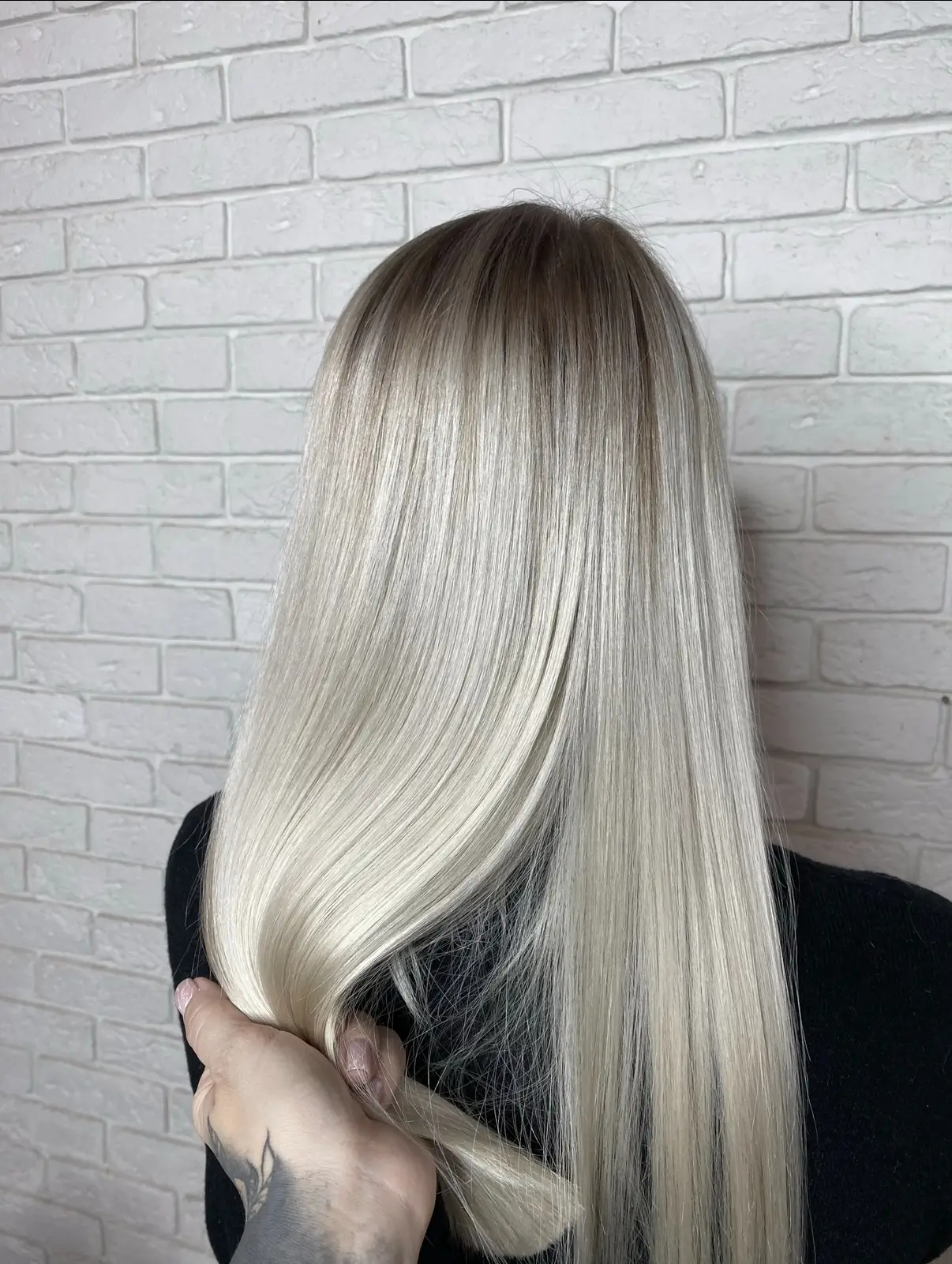
What babylights are
Babylights are highlights so fine that you do not read them as separate pieces. Each foil lightens only a little hair, and those foils sit close together.
The name describes the effect rather than the technique. It looks like the hair of a child who spent a summer outdoors: no stripe, just a sun-kissed look that is a touch lighter everywhere.
That is exactly what separates it from nineties highlights. There you could see the foil in the result; here you only see that your hair has gained depth and dimension.
Colourist Joel Warren of Warren-Tricomi says his clients often bring in photographs of their own children as inspiration, asking him to recreate that fresh, natural colour. That captures the point of the technique neatly.
What it is not: a way to go dramatically lighter. Babylights refine the hair colour you already have, they do not replace it.
Difference from highlights, balayage and lowlights
Four techniques, four different results. The distinction lies in section thickness and in whether foil is involved.
Classic highlights
Thicker sections spaced further apart, in foil, from the roots through the ends. More contrast, visible sooner, and visibly grown out sooner as well.
Babylights
Hair-fine sections placed close together, usually in foil, often right up near the scalp. Little contrast, a natural look and regrowth that draws far less attention.
Balayage
Painted freehand, generally without foils, and deliberately starting a few centimetres below the roots. That gives a soft transition but less brightness at the face.
Lowlights
The same foil technique but with a darker colour instead of a lighter one. Used to put depth back into hair that has gone flat or too light.
In practice they are often combined. Babylights for brightness, a few lowlights for depth, and a toner to set the whole thing at the right tone.
How the technique works
The whole technique comes down to how much hair goes into one foil. The less hair per section, the softer the transition into the hair around it.
The colourist weaves out hair-fine sections, often with the tail of a comb, and wraps each one in foil. That is why an appointment takes two to three hours: the number of foils easily runs into the hundreds.
Foil is the usual method but not the only one. Wella technical material notes that babylights can also be done without foil, depending on how much lift is needed.
Chemically the same thing happens as in any lightening service. The lightener breaks down the pigment present, with brown-black eumelanin disappearing faster than red-yellow pheomelanin, and the warm tones underneath come through.
Which is exactly why the finishing step is not optional. Without a toner those warm tones stay visible and the subtlety you paid for is lost.
Babylights on any hair colour
Babylights work on any hair colour, as long as you accept that the result relates to your base. That is not a limitation but the whole idea.
- Naturally blonde: babylights make it brighter and livelier without changing your colour.
- Dark blonde: this is where the technique shines, with a natural effect and low upkeep.
- Light brown: caramel and honey blend effortlessly into your natural colour.
- Dark brown: possible, but stay at two to three shades lighter and do not expect blonde.
- Greying hair: babylights can let grey blend into the whole rather than covering it.
Your hair type counts too. On fine hair every section shows sooner, so even finer pieces are used, while thick hair needs more foils to reach the same effect.
Babylights on dark hair
On dark hair the temptation is to go too far, and that is exactly where it fails. The professional guideline is no more than two to three shades lighter than your base.
Within that margin the lightened pieces stay in caramel and honey territory. Go further and you land in orange and yellow, and the contrast with your own hair breaks the natural look.
That is chemistry rather than taste. Dark hair holds more pigment, and removing it entirely needs a level of lift you do not want on fine pieces near the scalp.
Anyone who genuinely wants much lighter hair should take a different route. Staged lightening or an airtouch is a more honest answer than babylights pushed too far.
Around the face and at the crown
Placement decides the effect more than quantity does. Two zones do most of the work: the crown and the sections around the face.
The crown is where hair genuinely catches the most light, so the pieces may sit a little closer together there. That is what makes the whole thing read as natural rather than designed.
Around the face it is about brightness near the skin. A few fine highlights there do more visually than dozens at the back of your head, where you barely see them yourself.
If you want that zone pushed harder, you end up at face framing. Same thinking, but with deliberately more contrast around the face.
Regrowth and upkeep
Count on a touch up every eight to fourteen weeks. That is the big practical advantage over classic highlights, which start to show after six to eight.
Colourist Tomy Biton works to the rule that a full head is touched up after about eight weeks, while scattered pieces can wait twelve to fourteen. Balayage sits in the same range at twelve to fourteen weeks.
Those figures are trade convention rather than measured values. What sets your interval is mainly contrast: the lighter the pieces relative to your base, the sooner the regrowth shows.
On a second appointment the whole head is rarely redone. Usually only the pieces around the face and at the crown are refreshed, which saves time and spares your hair.
Are babylights gentler
Less hair is lightened per appointment than in a full head of highlights, and that genuinely counts for something. But it is fairer to put it this way: it saves on surface area, not automatically on damage.
How much your hair takes depends mostly on how far it is lifted, which product is used and what happens afterwards. A few pieces pushed too far do more harm than a full head kept neatly at two shades.
What always applies: every lightening service opens the cuticle and breaks down pigment. That is irreversible, however fine the sections are.
So the practical conclusion is not that babylights are safe, but that they let you come back less often. Over a year, that is the real gain.
Toner and colour retention
A toner almost always follows the rinse. Without that step the yellow or orange tones released during lifting stay visible.
The toner decides whether the result reads warm or cool. With babylights a warm, neutral shade is usually chosen, because too cool a toner makes the individual pieces visible again.
Expect the toner to fade before the lightening does. Four to six weeks is common, after which the warmth slowly returns.
More on how that works in the article on hair toner.
Care after the service
Washing less and rinsing cooler keeps your colour longer than any product. Every wash removes part of the toner pigment.
Wait at least forty eight hours before the first wash. After that use shampoo and conditioner made for coloured hair.
Sun and pool water are the two biggest enemies of lightened hair. A green cast on bleached pieces comes from copper in the water, oxidised by the chlorine.
A weekly mask keeps the ends supple. More on daily routines under hair care.
What babylights cost
With Hanna Valiullina babylights start at a hundred and sixty euro, home visit included. Highlights without toning start at a hundred euro and a fine balayage at a hundred and thirty.
The price moves with your hair length and density, since those decide how many foils are needed. On very long or thick hair you hear the difference before we start.
Budget two to four appointments a year. That makes babylights dearer per visit than a root touch up, but often cheaper across the year than highlights that need redoing every six weeks.
For comparison: a full head of babylights with a well known London colourist came to around three hundred and forty pounds, with over an hour of application alone. A different market, but it shows how much handwork is involved.
Babylights at your home
Hanna Valiullina does babylights at your home in Papendrecht and the surrounding area, with professional products and the same foils a salon uses. All you need is a chair, a socket and a tap.
With this technique daylight matters more than usual. You judge the contrast in the light you wear your hair in every day, not under salon lighting that warms everything up.
Every appointment starts by looking at what your base can take and how much contrast you want. See the options under services or read how balayage compares.
For an appointment or advice first, get in touch.
Frequently asked questions about babylights
What exactly are babylights?
Babylights are ultra-fine highlights where each foil lightens far less hair than a classic highlight and the pieces sit close together. The result reads like hair that lightened on its own in the sun.
What is the difference between babylights and highlights?
Classic highlights use thicker sections spaced further apart, babylights use hair-fine sections placed close together. That leaves almost no contrast, so the result looks subtler and more natural.
What is the difference between babylights and balayage?
Balayage is painted freehand, usually without foil, and starts a few centimetres below the scalp. Babylights go in foil and can run right up to the hairline, which gives more brightness around the face.
Can you do babylights on dark hair?
Yes, but only about two to three shades lighter than your base, in caramel and honey tones. Lifting further breaks the balance with your natural colour and stops looking natural.
How often do babylights need touching up?
In practice every eight to fourteen weeks, depending on how fine the pieces are and how much contrast there is. That is clearly less often than classic highlights, which start asking for attention after six to eight weeks.
Are babylights less damaging than highlights?
Less hair is lightened per appointment, and that counts. The damage, though, depends mostly on how far the hair is lifted, which product is used and what you do afterwards.
How long does a babylights appointment take?
Count on two to three hours, because every section is taken out and wrapped separately. On long or thick hair it runs longer.
What do babylights cost?
With Hanna Valiullina babylights start at a hundred and sixty euro, home visit included. The final price depends on your hair length and density, since those decide the number of foils.
The essentials
Babylights are ultra-fine foiled highlights placed close together, which leaves almost no contrast. They refine the hair colour you have rather than replacing it.
On dark hair they stay two to three shades lighter, in caramel and honey. Going further produces orange and breaks the natural look.
Touch ups run every eight to fourteen weeks, less often than classic highlights. Do expect a toner, since it fades sooner than the lightening itself.